Edit rethinks digital photo editing as a tangible interaction. Rather than relying solely on complex on-screen controls, the photo-editing device gives photographers physical access to core editing functions, enabling a more direct, focused, and expressive workflow.
Details
Although digital photo-editing software offers extensive creative possibilities, navigating menus, sliders, and tool panels can make frequent adjustments feel indirect and interrupt the creative process. Edit addresses this gap through an accessible physical interface.
Our analysis revealed that aligning straight lines, positioning image corners, and making subtle rotation adjustments can be difficult with conventional on-screen controls. In addition, the default rule-of-thirds grid offers limited support for precise geometric alignment. Edit explores a more direct and tactile approach to these essential photo-editing tasks.
Functions
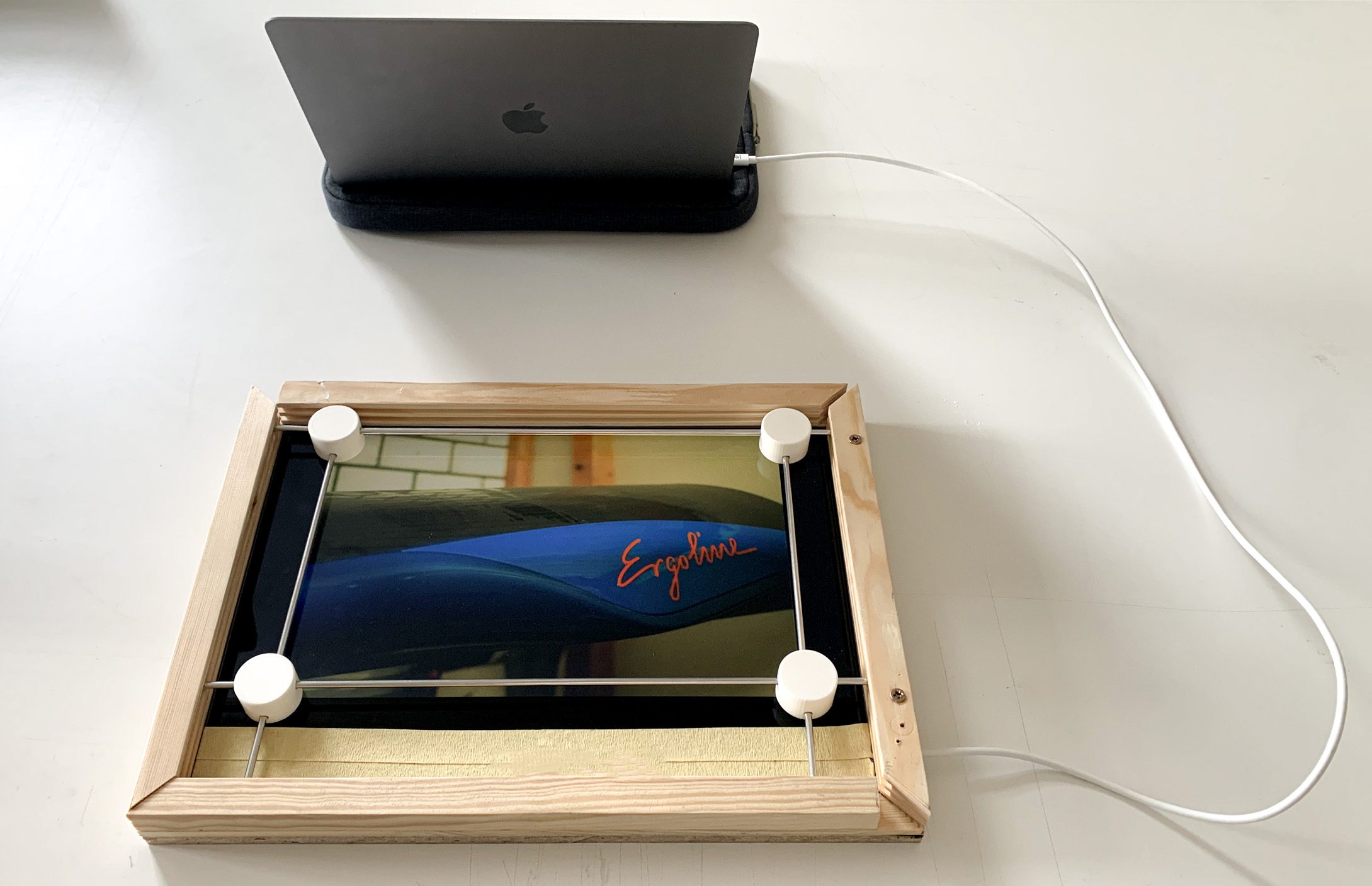
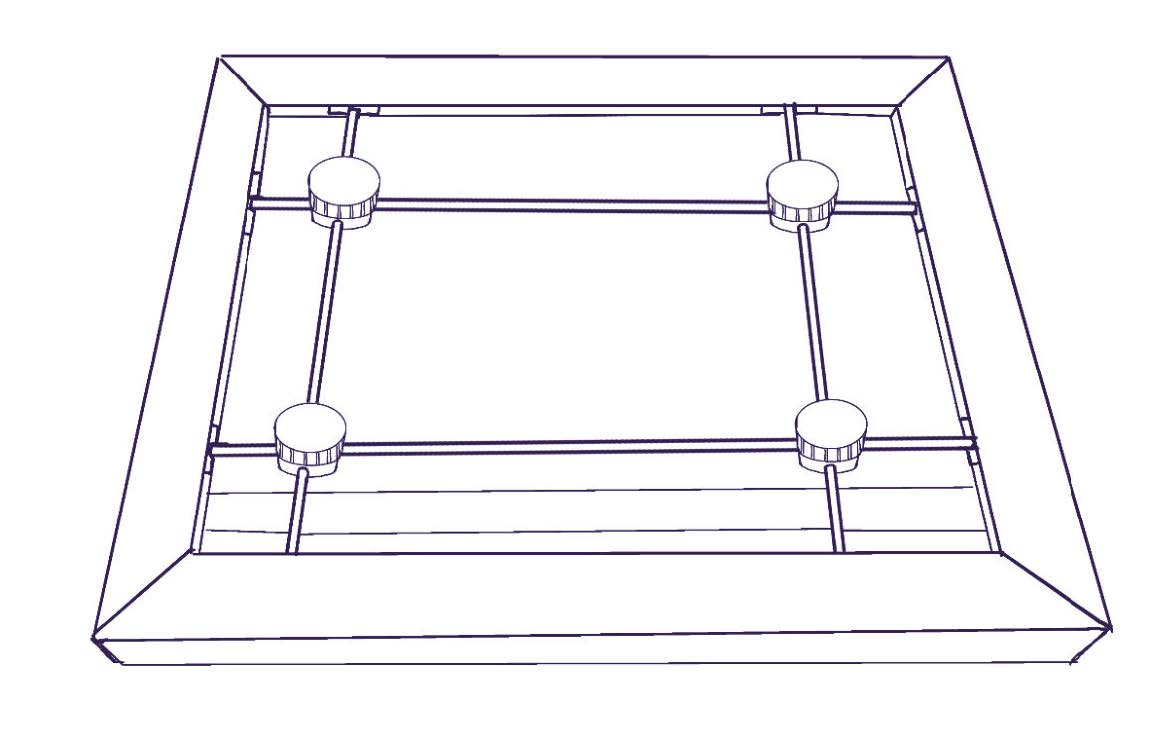
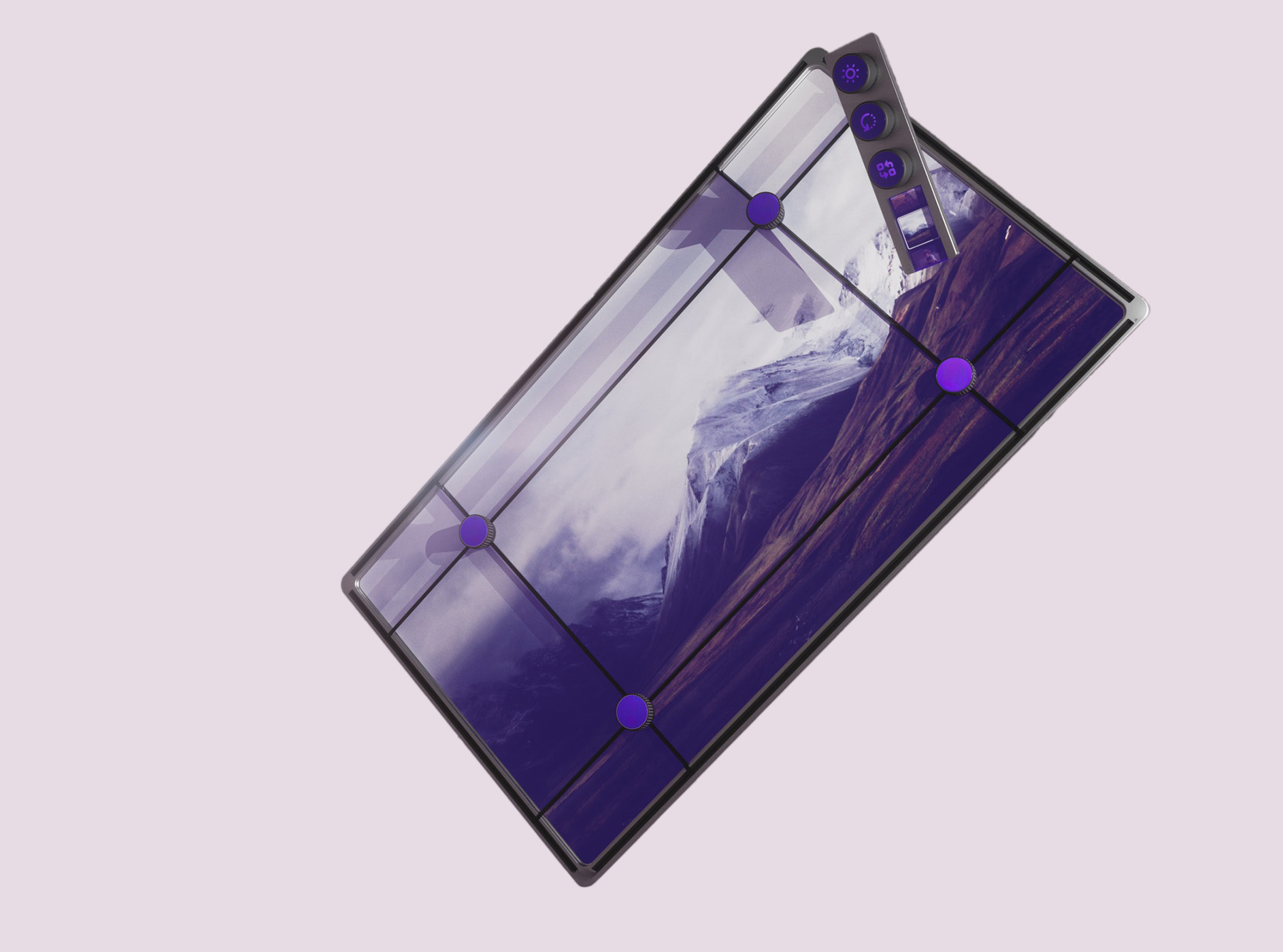
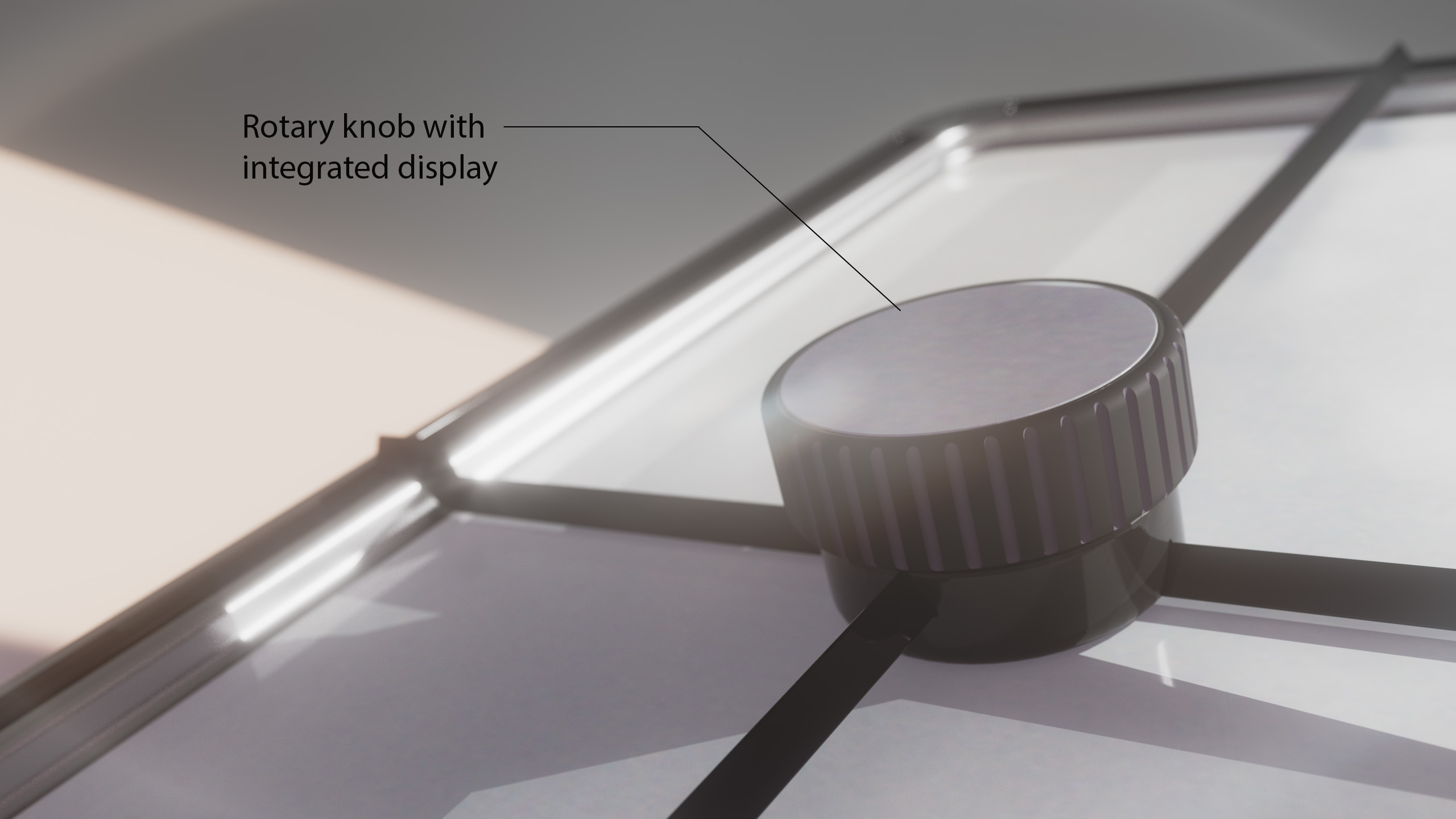
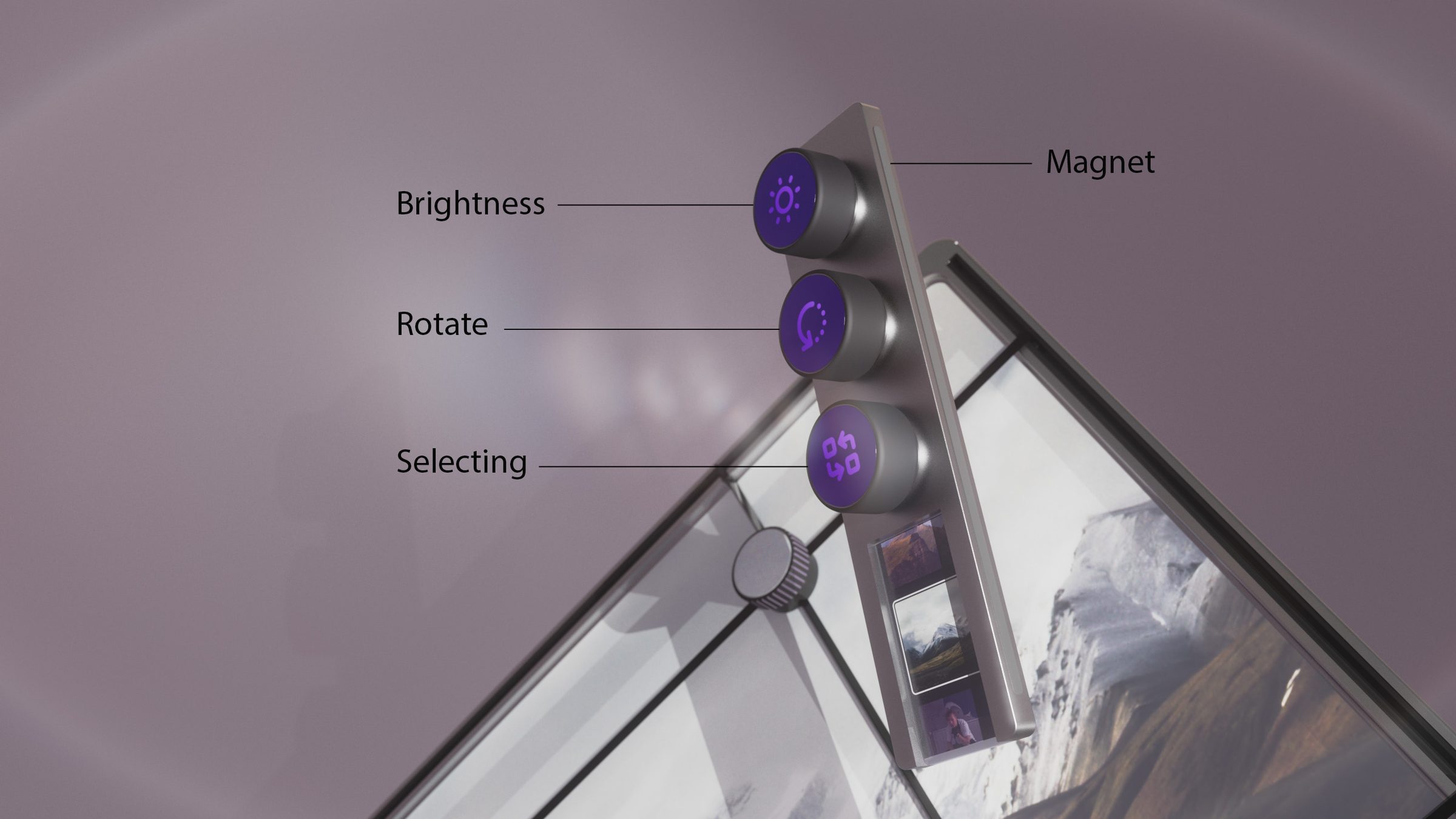
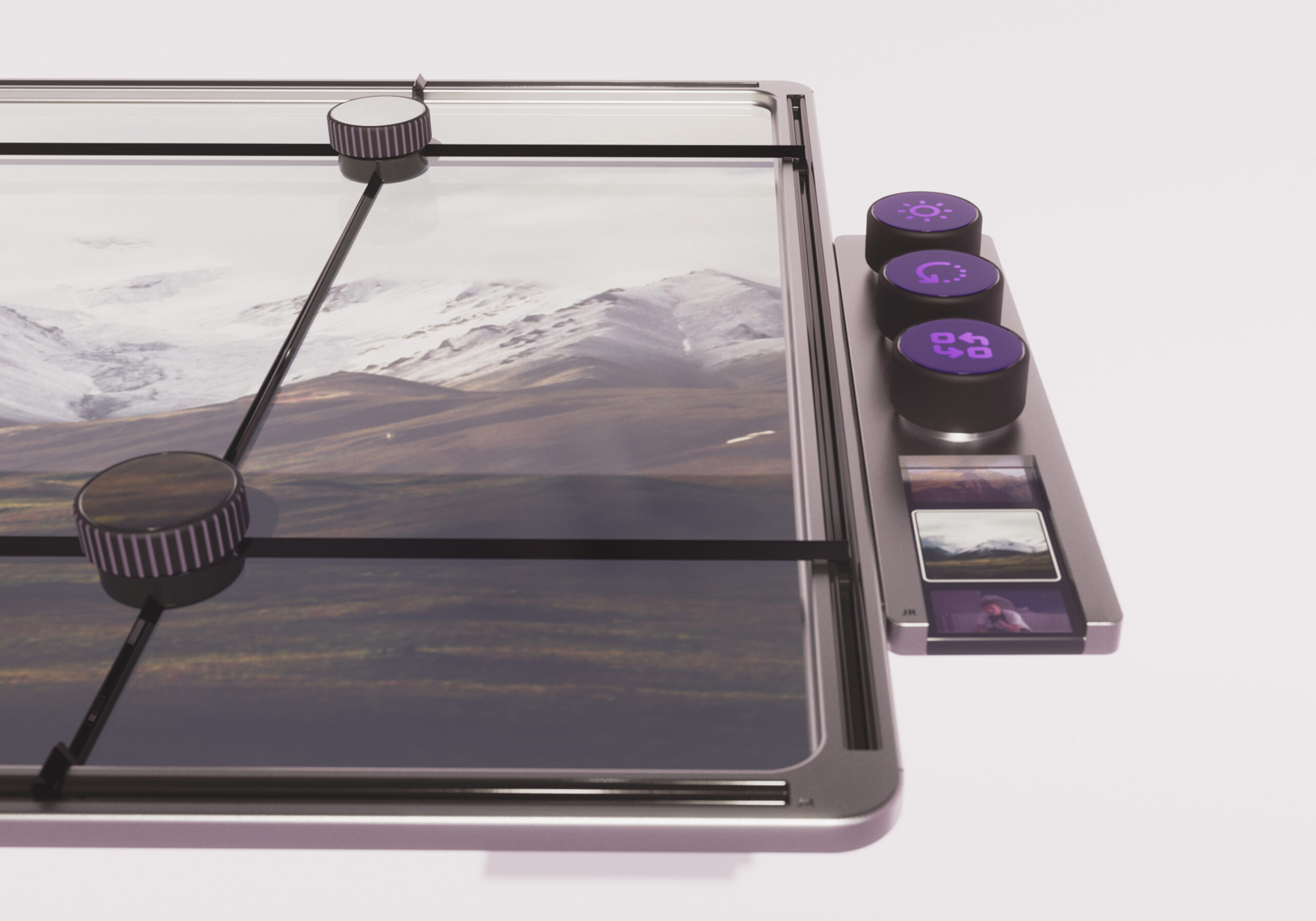
Edit is a portable 14-inch device for precise image cropping, alignment, and perspective correction. Movable pucks on the screen define the image corners, while a magnified detail view supports accurate placement. Rotating the upper part of each puck adjusts perspective, and pressing it locks the position. A magnetically attachable sidebar provides three multifunctional rotary knobs for settings such as brightness, contrast, saturation, rotation, and image navigation.
Design Prototype
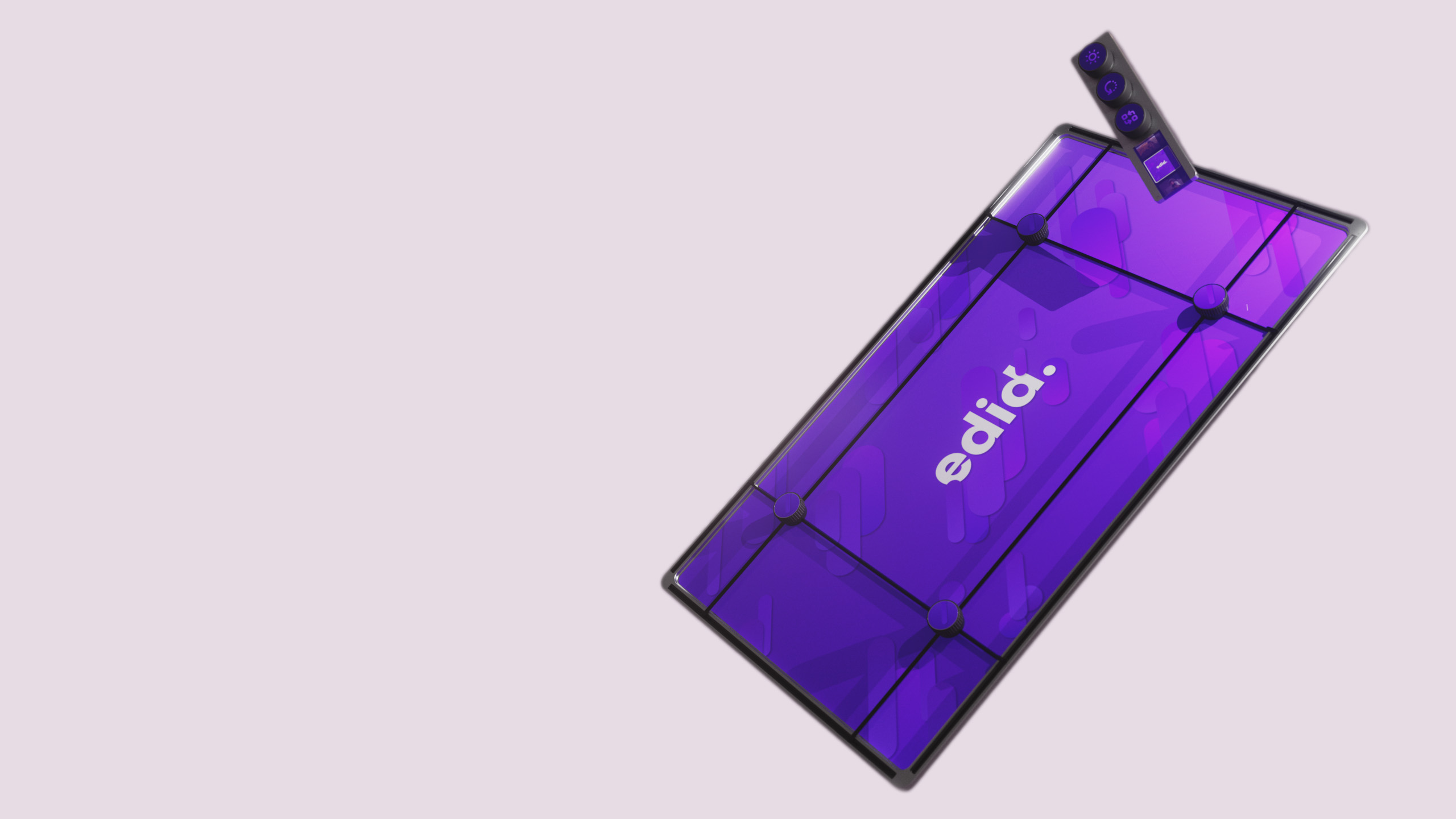
The design prototype focuses on precise visual alignment and clear physical interaction. Triangular, high-gloss black metal guide rods reduce parallax errors, while rubber-coated pucks provide a comfortable, non-slip grip. Each puck features an integrated display for contextual feedback. The space-grey aluminium housing creates a robust, portable product character, and the detachable sidebar can be positioned on either side of the frame to support both left- and right-handed use.
Design Process
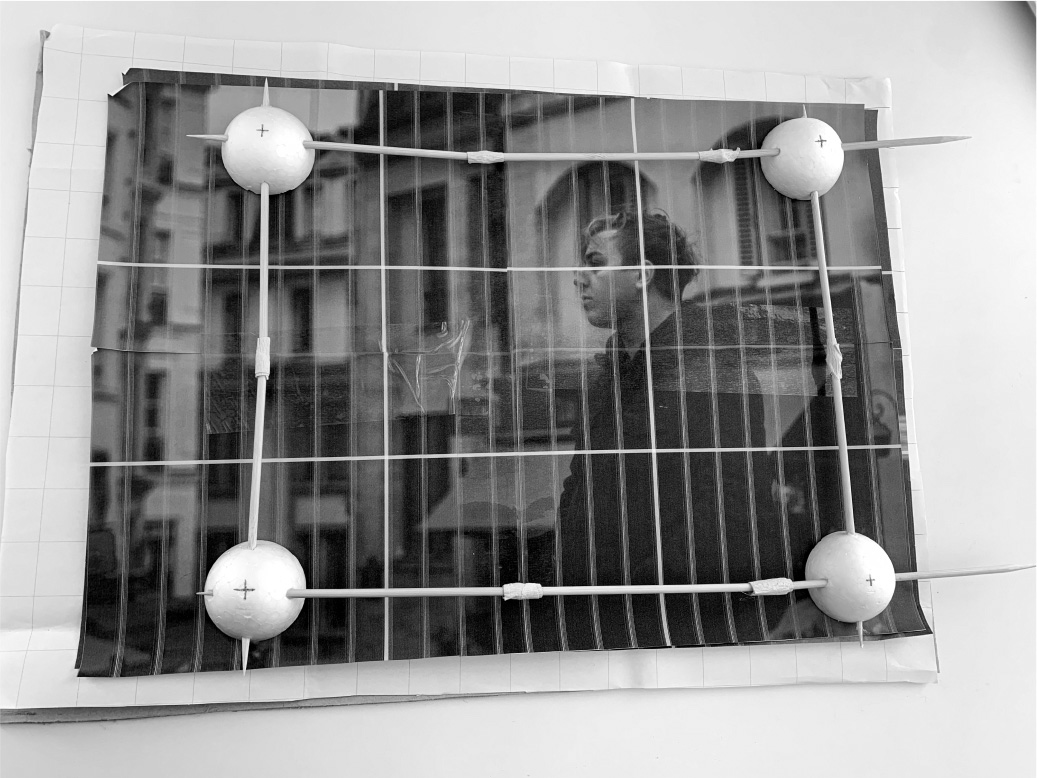
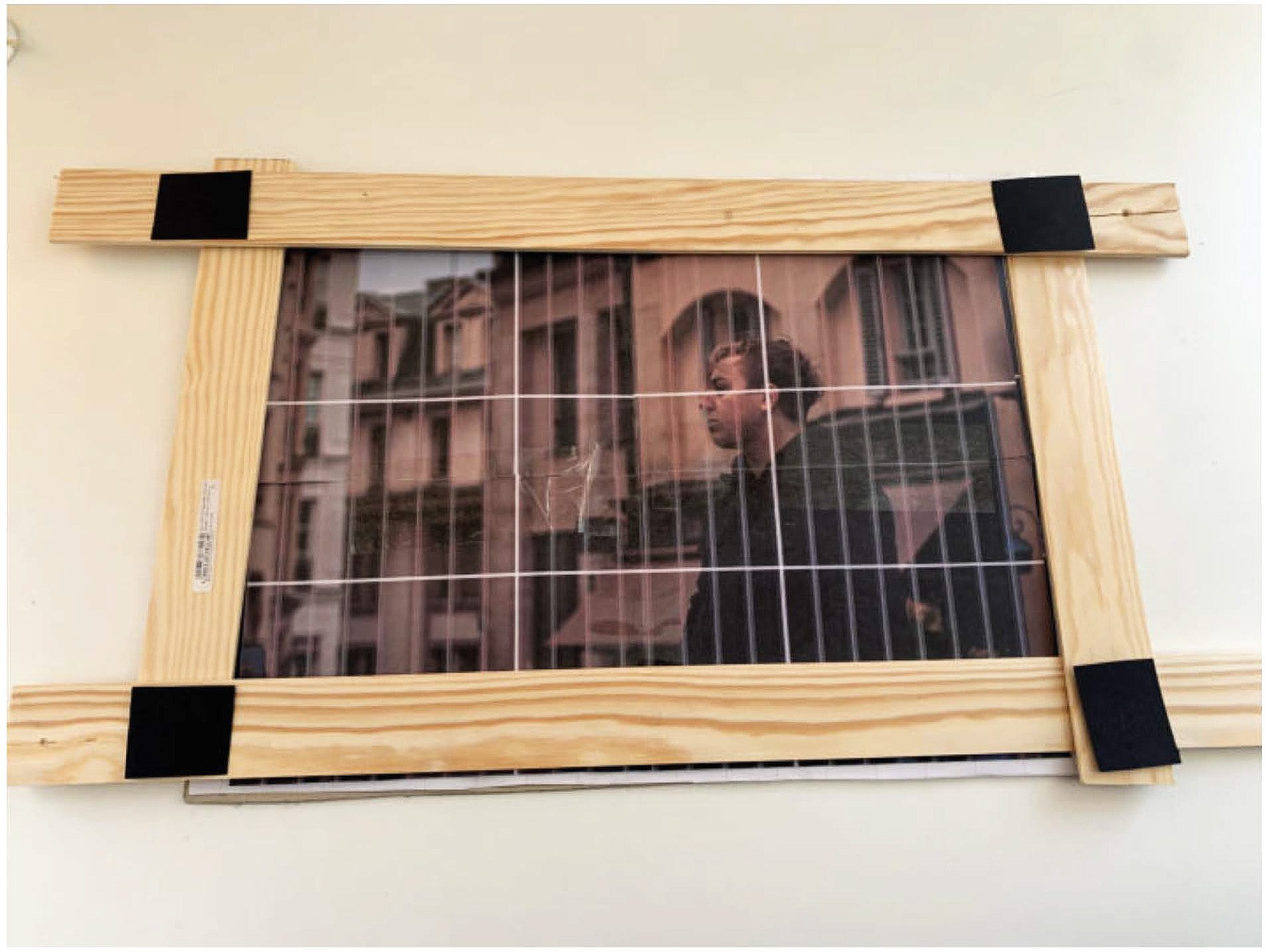
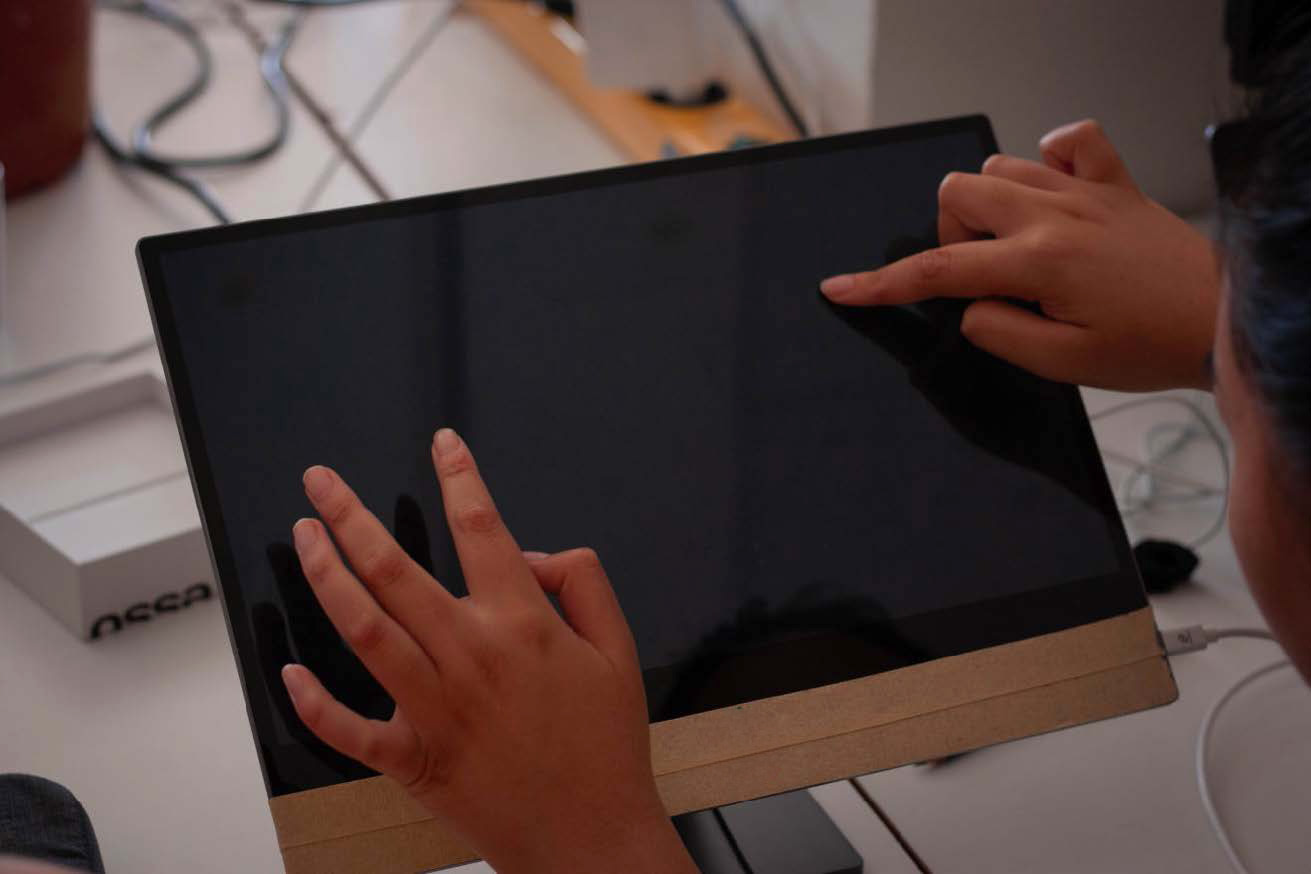
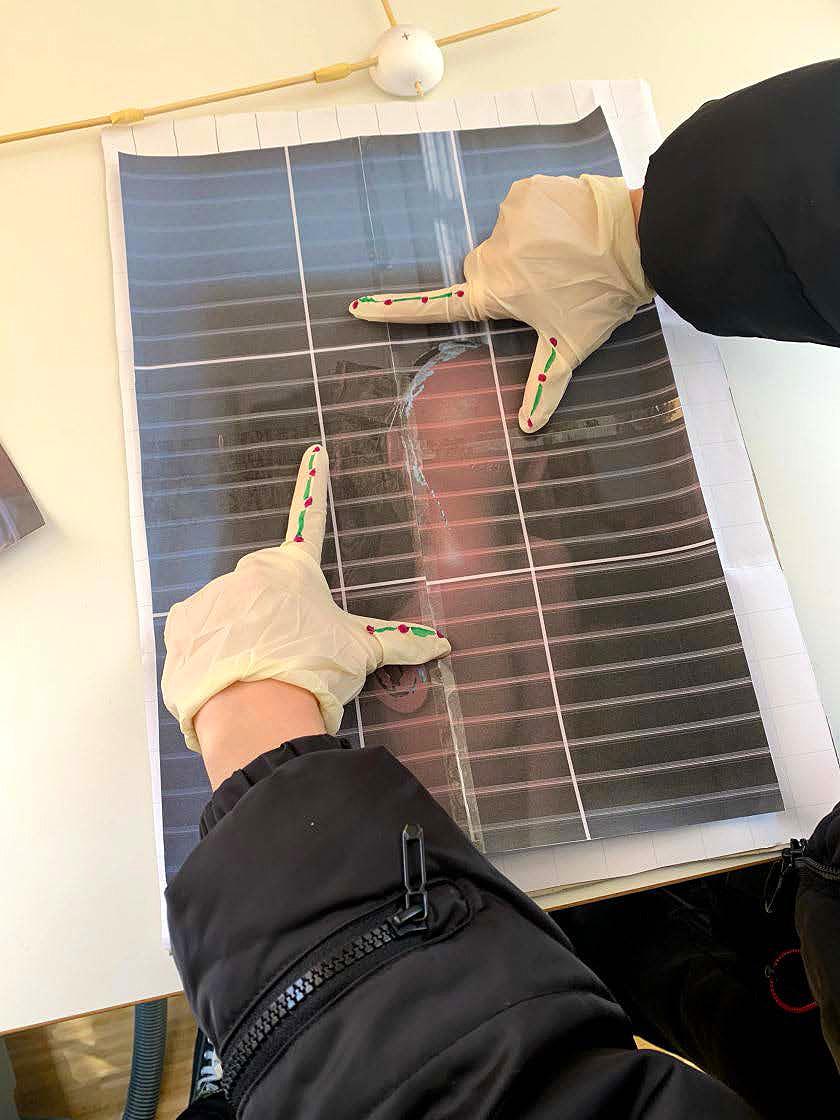
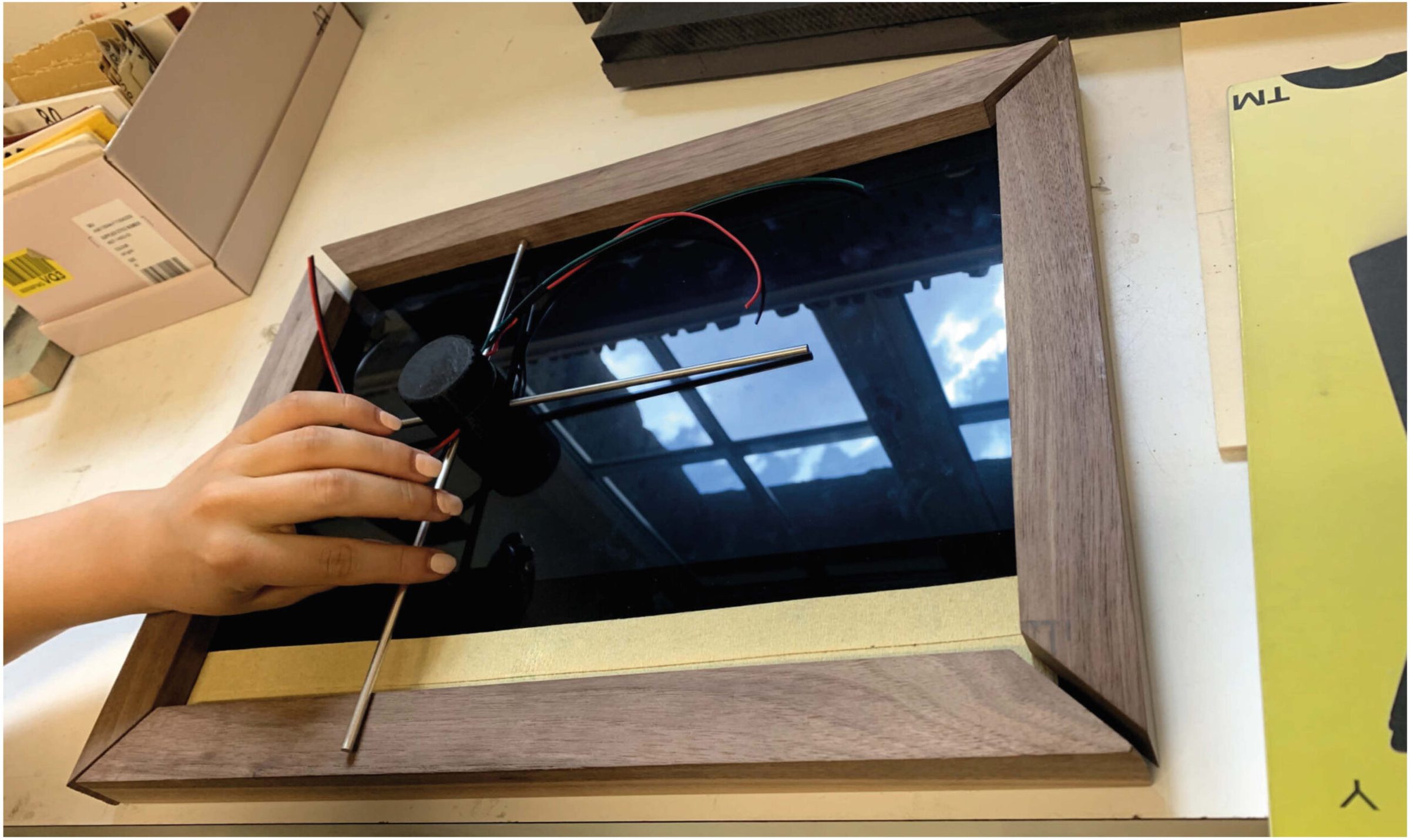
The design process combined research, prototyping, testing, and refinement. During the research phase, we explored how physical objects and natural gestures could support image cropping and alignment. Ideas such as magnifying frames, editing gloves, and adjustable frames were translated into paper prototypes and tested through hands-on exploration. Using the “Wizard of Oz” method, we simulated the intended interactions to evaluate the concept before developing its technical functions. These experiments led to the frame-based interaction principle behind Edit.
Reflection
Testing revealed issues such as parallax errors, unclear controls, and uncomfortable body positioning. These insights guided our design decisions and helped us refine Edit into a portable device that enables precise alignment and direct physical interaction.